January/February, 2013 | Scientific American Mind
Playing violent video games can sharpen our focus, reasoning and decision-making skills. But do we really need the weapons?
By Lydia Denworth
I am in an overgrown lot leaning against an eight-foot tall shipping container. I look both ways, weighing my options. A man with an assault rifle is looking for me, just as I am looking for him. Hoping for a better vantage point, I run toward the abandoned car to my right. A metallic bang rings out as my opponent’s shot hits the wall I have just left. I dodge around the next container then circle behind it. Raising my M-16, I peer through the scope as I run. There he is! I hit the track pad of my laptop hard and fast, but my aim is wobbly. I miss. He spins, fires, and I’m dead.
So ended my introduction to first-person shooter video games. Clearly, I was not very good. With practice, I would probably get better. What is less obvious is that a decade of research has shown that if I spent a few more hours playing Call of Duty, I could improve more than my aim and the life expectancy of my avatar. Aspects of my vision, attention, spatial reasoning, and decision-making would all change for the better.
These striking findings have contributed to a shift in the national conversation about video games. Not long ago, a few lone voices contested the conventional wisdom that they were at best frivolous and at worst a dangerous waste of time and brainpower. Yet more than 90 percent of children play them, and adults do, too. In fact, the average gamer’s age is 33 years. Along with continuing popularity has come a surge in acknowledgement of the positive sides of gaming. Game designer Jane McGonigal’s 2011 book Reality is Broken even argued that games can change the world and the book became a bestseller. In a 2011 speech to students, President Barack Obama recognized the potential and called for investment in educational technology, although with a caveat: “I want you guys to be stuck on a video game that’s teaching you something other than just blowing something up.”
Teaching is the critical word. The most consequential conclusion of the research is that videogames have a power few other activities can claim. With practice, a violinist can play a Mozart string concerto beautifully, but that will not make her better at much else. Gamers, though, do not just learn to be good at shooting. In neurological terms, action videogames seem to “retune connectivity across and within different brain areas,” according to neuroscientist Daphne Bavelier of the University of Rochester and the University of Geneva. That means that gamers “learn to learn.” The ability to apply learning to broader tasks is called transfer, and it is the holy grail of education.
So far the games shown to have the most potent neurological effects are the ones parents hate the most: violent first-person shooters. Scientists are trying to figure out how and why these games affect players so as to create products that emphasize benefits but have fewer drawbacks. “I’m really interested in how the brain learns and how we can promote brain plasticity for learning,” says Bavelier. “The issue is trying to understand how technology can be leveraged for the better.”
July 29, 2011 | Motherlode NYTimes.com
By Lydia Denworth
When my husband told me he wanted to move from New York to Hong Kong, my first thought was: Really??!! My second thought was: What about Alex?
The youngest of our three sons, Alex is almost entirely deaf. He uses a cochlear implant and a hearing aid. At the time, Alex was finishing first grade. He had come a very long way. His language, reading, and general learning—all of which hold extra challenges for a child with hearing loss—were close to age appropriate. We had a carefully cultivated support network: a school we loved, a top-notch doctor, a teacher of the deaf, a speech therapist, and three—yes, three—audiologists (one for the implant, one for the hearing aid, one from the Board of Education to service his school).
Could we take him halfway around the world and start all over again?
Did his success depend on his particular situation or did it mean he was ready to move beyond it?
Furthermore, what weight did his hearing loss carry relative to all the other considerations that determine life decisions: your career versus my career, the cost of this versus the savings from that, the happiness of this kid versus the education of that kid, change versus status quo, thirst for adventure versus desire for rootedness? It was an equation for which the answer changed every time depending on how you valued each variable.
Alex’s needs counted for a lot, in my estimation. After he was diagnosed, I had stopped working for several years in order to focus on him. Already, my husband and I had quietly retired some visions of where and how we might live because of Alex. I would make all those decisions the same way again.
On the other hand, was I being more defensive and protective than necessary? Was I reacting out of weariness, clinging to the familiar? Yes, I was tired from the effort of getting to this point, and I felt safe in the security blanket I had woven for Alex. But he really was doing awfully well, and deaf children don’t just live in New York City. I opened the door to a small thought: it might not be impossible. Even such a tentative idea was freeing.
After some heavy deliberation, my husband and I sat our boys down and told them we were considering a move. The older two were shocked and teary, but Alex could barely contain himself. With his eyes even wider than usual and a grin on his face, he cried: “We’re moving to China! You’re the best parents ever!”
We were floored.
The other boys immediately protested. “He’s only six. He doesn’t understand.”
Alex was undaunted: “I want to see the Great Wall. I want to learn Mandarin, more than just Ni Hao. I’ll even try some Chinese food!”
His older brothers had a point. Alex couldn’t possibly grasp what it really meant to uproot our family. Neither could he think through how much more difficult it might be for him in particular to find a school, therapists, and a community that was as warm and nurturing of a child with a disability as the one we had in Brooklyn.
On the other hand, Alex inspired me. I felt he was telling me something critical: “Let me go!” Hadn’t the whole point of the implant been to broaden his opportunities and let him exist in as wide a world as possible?
So I got on a plane to investigate what life in Hong Kong would look like. It wasn’t all encouraging. I left one school appointment in tears. There was no such thing as a teacher of the deaf. One speech therapist I interviewed had such a heavy Chinese accent it was hard even for me to understand her. We would have to buy some expensive, new equipment as the frequencies were different. And who would repair a broken hearing aid?
That last question is no small matter. The technology available for hearing loss today is astounding, but it requires every parent to become a troubleshooting guru. In the space of one two-year period, for example, Alex’s processor (the external piece of his implant) was repaired fifteen times.
But we moved anyway. My husband’s career and the chance for larger life experiences won out. We won’t stay in Hong Kong forever, and Alex’s hearing is one reason, but not the only one. In fact, as we come to the end of our first year, ironically, Alex is the least of my worries. Unlike the rest of us, Alex has suffered no bouts of homesickness, and middle school for my oldest has proved a bigger challenge than hearing loss.
Of course there have been glitches, technological and otherwise, (his hearing aid is in for repair as I write). Overall though, Alex has adjusted beautifully. He was accepted at a good school. He made friends quickly. He is managing to learn some Chinese. We found a speech therapist. He got to see the Great Wall.
Perhaps most significantly, our move has given both him and me new confidence in his abilities. We will factor that in to the next round of life decisions. And I take comfort in knowing that Alex is honing some critical skills: resilience, self-advocacy, and the ability to find an audiologist anywhere in the world.
May 2011 | Personal Essay

By Lydia Denworth
Earlier this year, I took my sons on a walk around Victoria Peak. We had been living in Hong Kong six months, but the boys had not yet seen the famous view of the harbor from the top of the Peak. They oohed and aahed at the dense scrum of skyscrapers wedged between steep green mountains and the busy waterway. Then they admired the sharp hills of the New Territories visible in the distance.
What really stopped them in their tracks, though, was a magnificent Banyan Tree we discovered a little further down the path. It was huge, it’s wall of a trunk more like a garden shed than a tree. As Banyans go, it turned out to be nothing special. The largest one, in Calcutta, is some 430 feet wide—longer than a football field. Nonetheless, we were impressed.
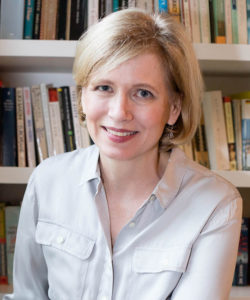
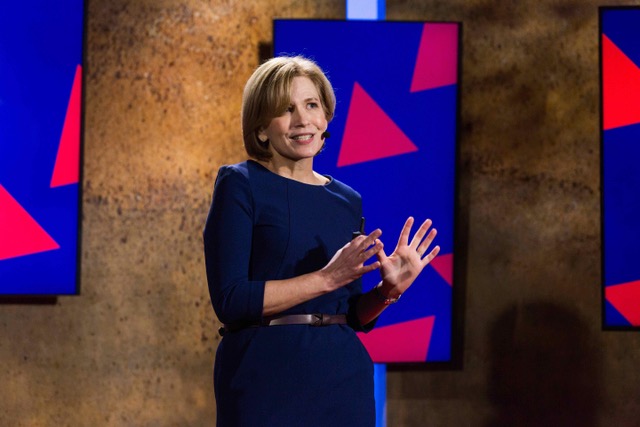
Lydia Denworth is a writer based in Brooklyn, New York.
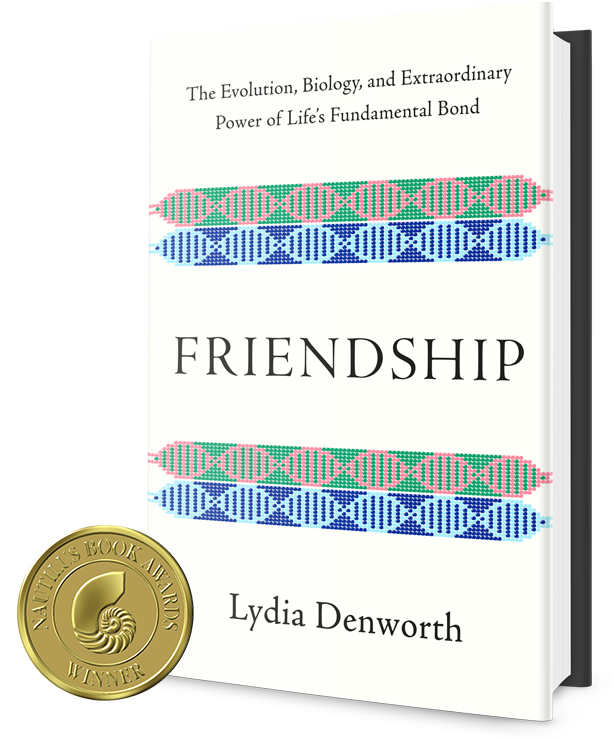
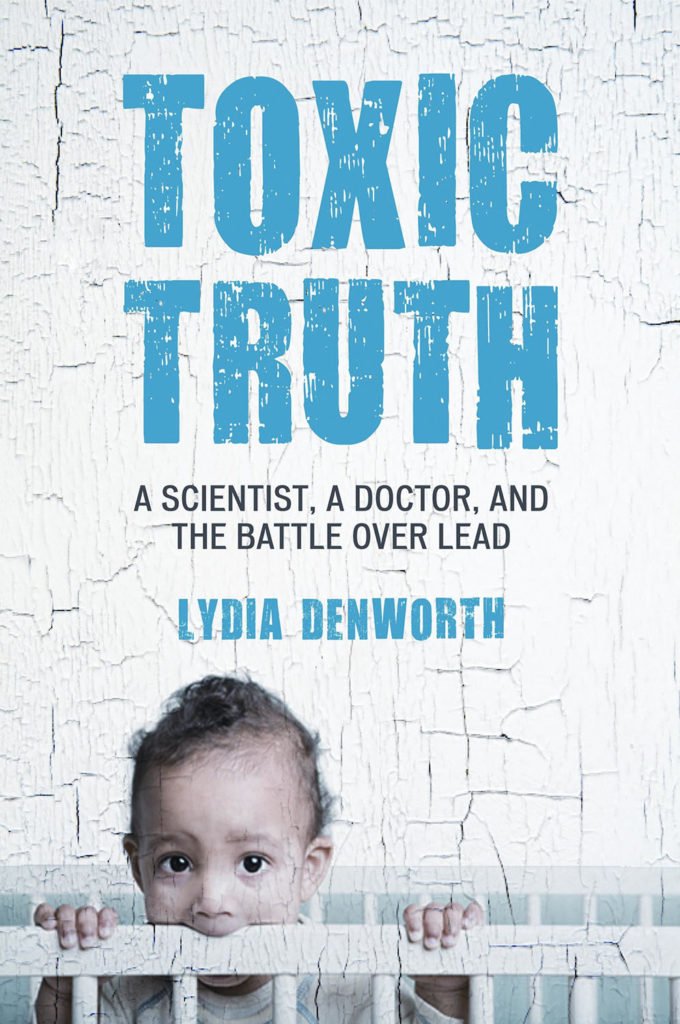
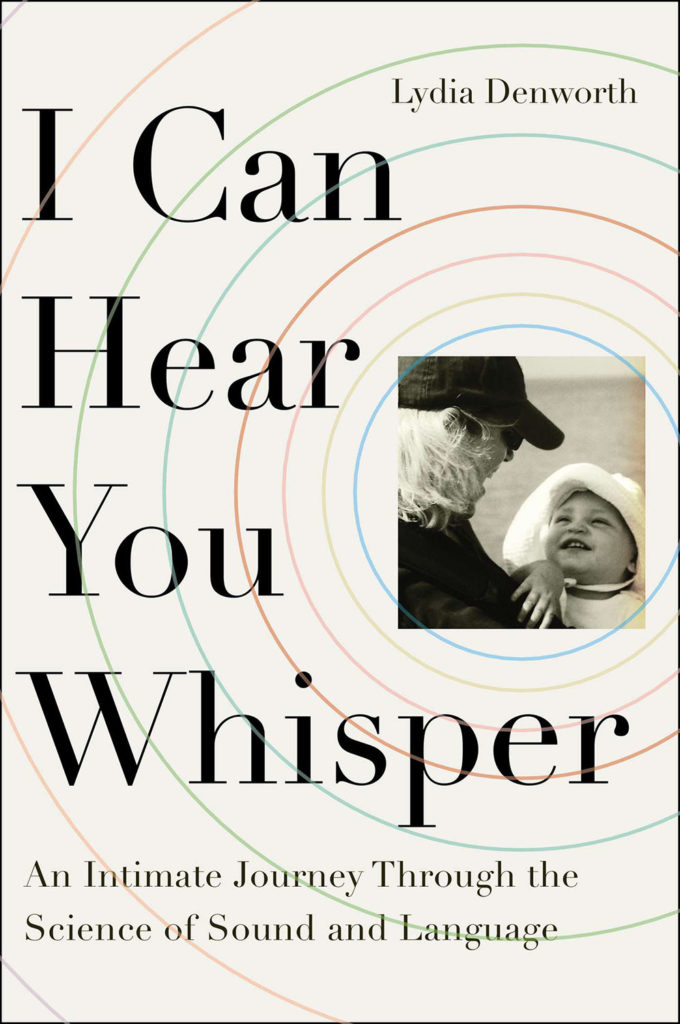
She is the author of Toxic Truth: A Scientist, A Doctor, and the Battle Over Lead (Beacon Press, 2009) and the forthcoming I Can Hear You Whisper (Dutton.)
Lydia is a former reporter for Newsweek and bureau chief for People. She is currently working for such magazines as Scientific American Mind and Parents. Her writing on science, education and social issues has appeared in The New York Times, Redbook, Health, and other publications. She has also been an adjunct professor of journalism at Fordham University and Long Island University.
Read more
© 2011 Lydia Denworth | site by swissmiss